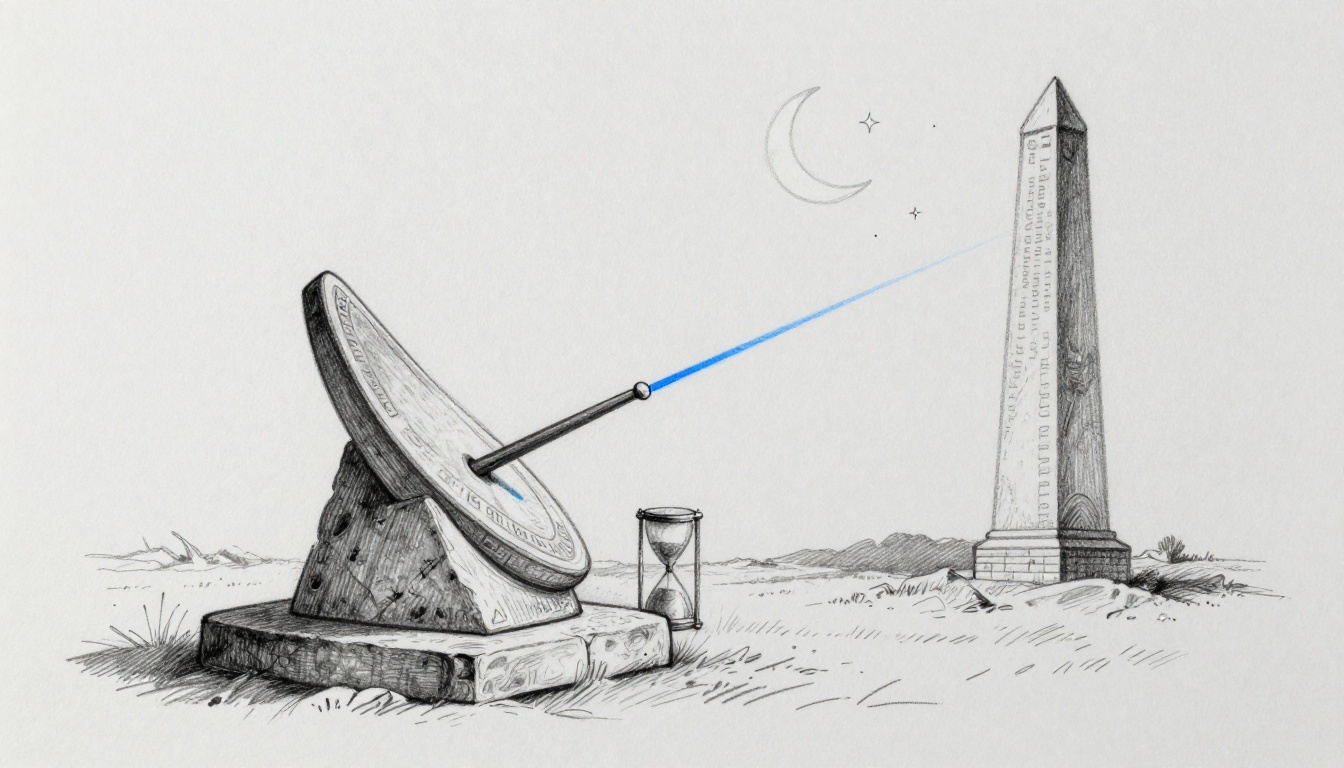
Imagine waking up and trying to guess the time by the sun’s position. No watch. No phone. No screen to check. You just look, notice, and decide.
Long before mechanical clocks, humans still needed order. They farmed on schedules. They prayed at set times. They traveled and traded with dates in mind. So they built time systems from nature itself.
What changed later was not the goal. It was the tools. These early methods, from skywatching to water and fire, still shape how we measure time today.
How Early Civilizations Watched the Sky for Time
Nature already had a rhythm, and ancient people learned how to read it. The sky offered a giant clock face that moved across the day and night. The sun traced hours during daylight. The moon hinted at weeks and months. Stars marked time after sunset.
This was not “guesswork” in the casual sense. People trained their eyes. They noticed patterns and repeated observations. Over years, those patterns turned into practical timekeeping.
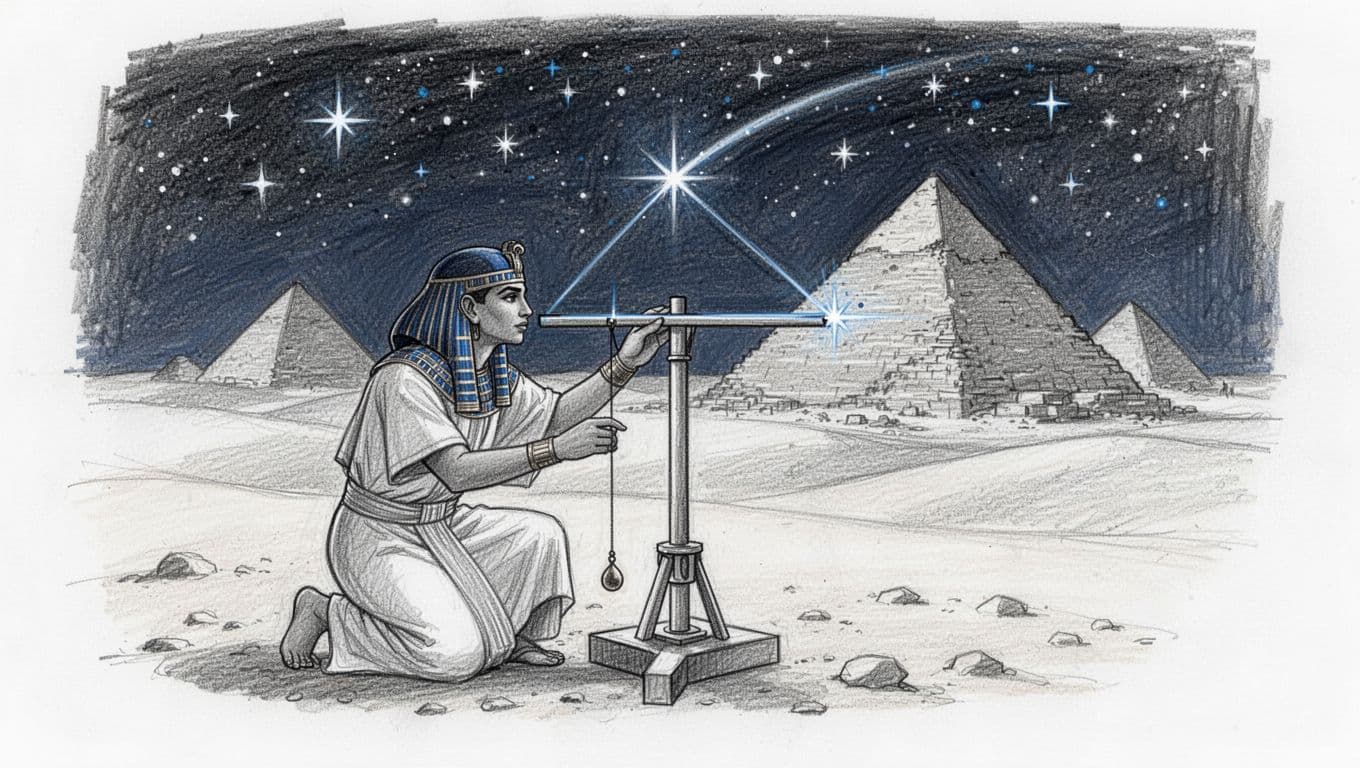
For example, Egyptians used nighttime stargazing for hours. One tool, the merkhet, helped align with a north star so observers could track star movements. Babylonians also advanced timekeeping through math, using a base-60 system that still echoes in modern minutes and hours.
Of course, sky-based time had limits. Cloudy nights slowed everything down. Busy days could make careful observations hard. Still, people kept refining their methods because the need for time was constant.
Here’s a fun way to feel how “time” can be physical: around the solstices, the sun’s shadow grows shortest or longest. That shift gave ancient people a clear seasonal marker. It also reminded them that even days change in length.
Sun and Moon as Daily Guides
The sun did most of the work, because it moves predictably. In daily life, people could watch the sun’s arc across the sky. As it climbed, shadows changed. As it dropped, the light shifted.
Farmers used that shift to plan tasks. Hunters timed trips around daylight. Families arranged work based on morning light, midday warmth, and late-afternoon shadows.
The moon added another layer. Its phases cycle in about a month, so it helped people plan months for planting and religious events. Instead of “checking the time,” they tracked “where the moon is in its cycle.”
Ancient markers also helped make sun tracking easier. Egyptian obelisks were major examples. As sunlight hit the stone, the cast shadow moved along the ground. That meant people could split broad parts of the day into rough sections, like morning and afternoon.
Over time, this simple sun-and-shadow watching taught a powerful lesson. If the sky keeps moving, then time can be read from motion.
Stars and Tools Like the Merkhet
At night, sundials stop working. So humans turned back to the stars. The idea was simple: if the stars cross the sky in steady ways, then their positions can mark time.
The merkhet helped observers do that with more structure. In many accounts, a person used the tool with a plumb line to establish a straight reference line. Then, they aligned the setup with the north star (Polaris) when it was visible.
As the night progressed, stars would move across the observer’s reference. That movement could be translated into nighttime hours.
For a closer look at how the merkhet was described and used, see merkhet timekeeping instrument.
Nighttime methods had an edge. They did not rely on fair weather daylight in the same way sundials did. Still, they demanded clear skies. They also required training, because you had to recognize the right stars.
Sundials: Shadows That Marked the Hours
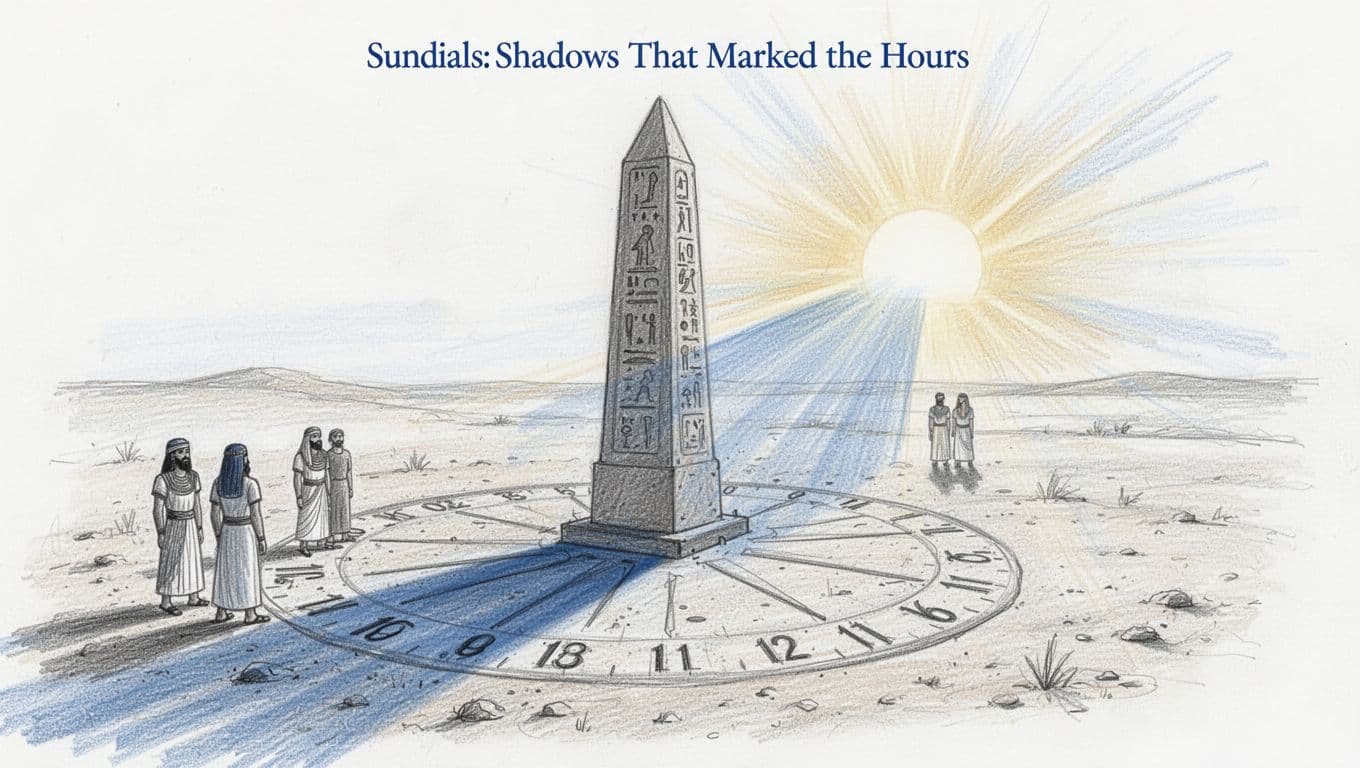
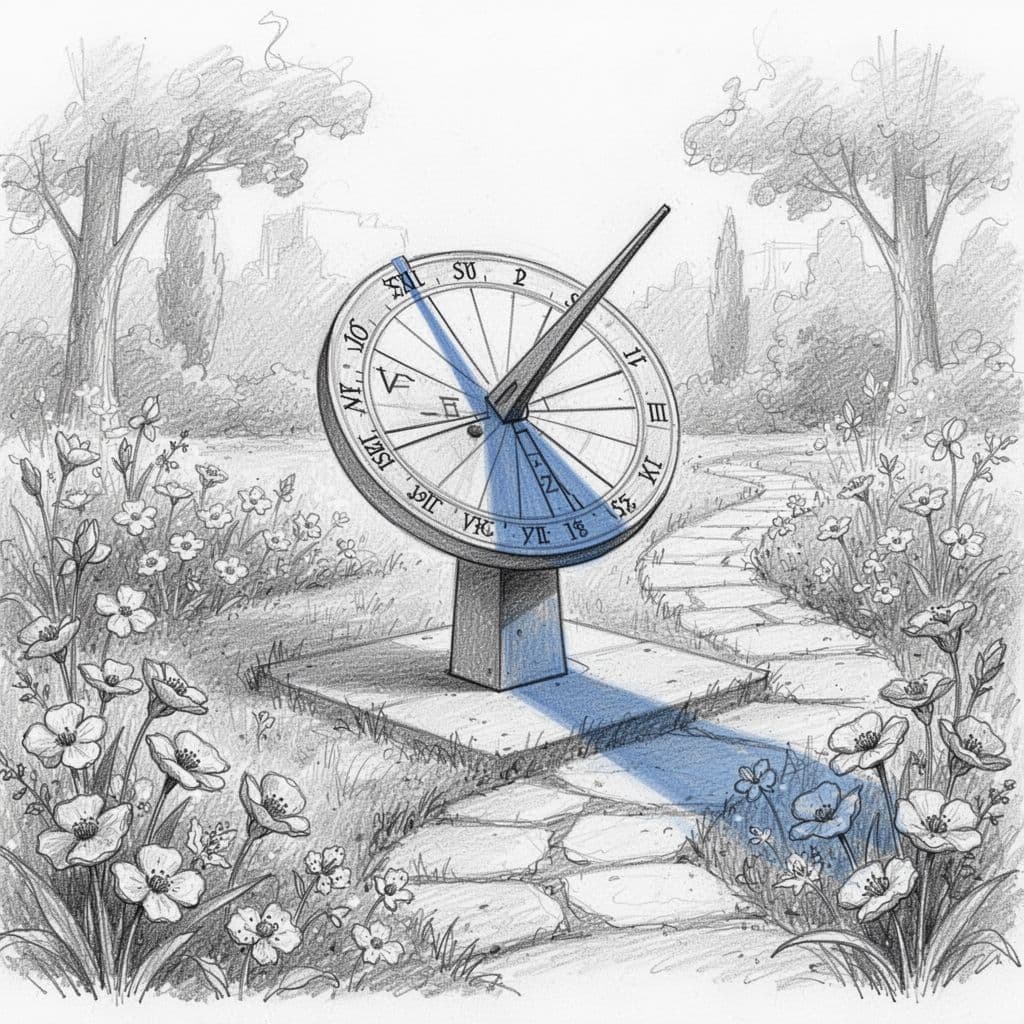
If the sky was a big clock, sundials were the next step: a pocket-sized version you could use on the ground. A sundial does not “count” time by magic. It tracks the sun’s position by casting a shadow from a fixed part.
That fixed part is often called a gnomon. As the sun moves, the gnomon’s shadow slides across marked surfaces. By matching shadow position to hour lines, people could estimate the time during daylight.
Sundials spread because they were practical. You could place them in courtyards and fields. You did not need a night sky. And they helped turn daily routines into repeatable schedules.
Early versions appeared in different forms around the ancient world. Babylonians and others influenced how people divided the day. Egyptians and Greeks improved designs over time. Some sundials even included seasonal adjustments, because shadow angles change across the year.
The result was vivid and physical. You could almost watch time “race” across stone.
Egyptian Obelisks and Early Designs
Some of the most striking sundials were also monumental. Egyptian obelisks acted like giant gnomons. Their shadows stretched and shifted as the sun moved.
Because obelisks were tall and stable, they made shadows long enough to notice clearly. That helped people spot key dates too, like the solstices. When the shadow behavior changed, it signaled the turning of seasons.
Smaller portable versions existed as well. These designs focused on dividing the day into practical segments. In bright regions, you could use the sun and shadow to estimate hours without advanced tools.
Even if someone did not understand the geometry, they could still benefit. You could stand outside, watch the shadow, and plan your next task.
Greek Hemicycle and Precision
Greek designers leaned into math and geometry. One famous example is the hemicycle sundial, often linked to more precise hour and season tracking.
In a hemicycle approach, parts of the sundial use curved markings and careful angles. Observers could read shadow position not only for time of day, but also for the year’s seasonal shift, since the sun’s path changes across months.
In other words, the sundial became more than a “day clock.” It became a seasonal guide. That mattered for agriculture and civic life.
If you want a clear explanation of how sundials worked across ancient cities, check how ancient civilizations used sundials.
Water Clocks: Flowing Water Through Night and Clouds
Sundials are limited by daylight. When the sun sets, the shadow stops. That’s where water clocks, or clepsydras, came in.
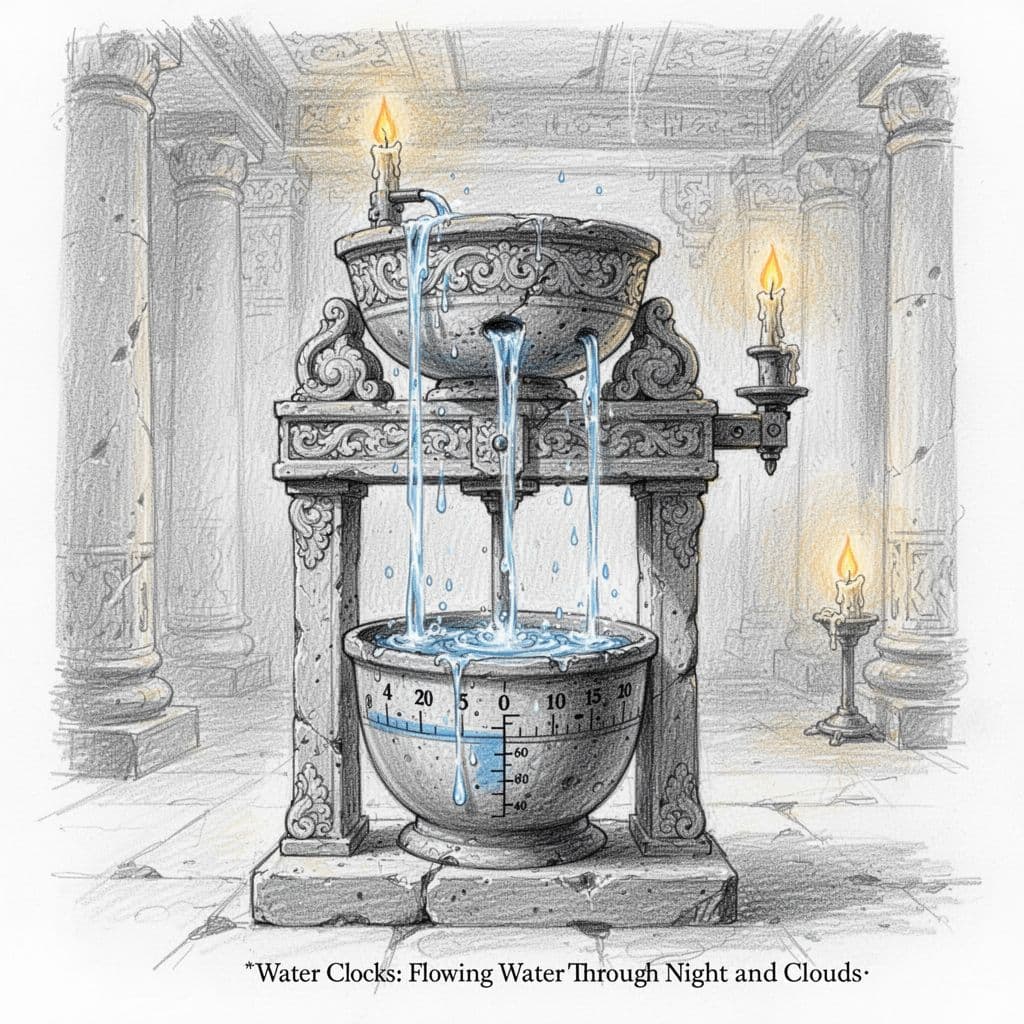
Water clocks measured time by watching water move at a steady rate. Instead of shadows, the “clock hand” was a water level. People marked vessels with divisions so they could estimate hours as water filled or drained.
Clepsydras solved two big problems at once. They worked at night. They also worked when clouds made sky tracking unreliable.
Ancient cultures used them widely. Sources often describe Babylonian and Egyptian versions dating back well over a thousand years. Later, Romans used water clocks to manage speech time in court-like settings.
Still, water clocks had issues. The flow rate could change as the water level dropped. In practice, that made timekeeping less perfect than people wanted. The effect can feel like a bathtub draining. It can move smoothly at first, then slow near the end.
How Clepsydras Worked Day and Night
Many clepsydras relied on a simple flow. Water entered or drained a container through an opening. As it moved, marks on the vessel acted like a reading scale.
Some designs tried to improve steadiness by shaping the system so water pressure stayed more consistent. Even then, changes happened. As levels shifted, flow could slow. Engineers and users responded by adjusting designs or accepting some error.
The key win was reliability under night conditions. A night-time water clock did not need a clear sky. It needed a vessel, water, and careful reading.
For a quick factual overview of how a clepsydra works, see Clepsydra water clock.
From Temples to Courtrooms
Water clocks didn’t stay in science labs. They entered daily life and power structures.
In temple settings, time helped organize rituals. Priests and workers could plan parts of ceremonies based on water-measured intervals. That mattered because religious calendars relied on consistent timing.
Later, leaders also cared about timing in disputes. Romans used water clocks in some legal and public speaking situations. If a person spoke too long, the process stalled. Water clocks offered a way to keep the schedule moving.
So water clocks did more than track hours. They supported fairness, control, and routine.
Burning and Falling Time: Candles, Incense, and Hourglasses
When sunlight and sky were not available, people looked for other repeating processes. Fire provided one. Wax melts in a predictable pattern if conditions stay similar. Incense burns at a relatively steady pace. Sand falls through a narrow opening in a set time.
These methods were not as “pure” as astronomic tracking, but they were portable. They worked indoors, in travel, and in places where sky clocks were inconvenient.
Candles were often marked with lines. As wax burned down, the marks acted like a timer. The candle could be placed where people wanted to measure a specific interval.
In East Asia, incense clocks also appeared. In many descriptions, incense sticks or coils burned at a fairly consistent rate. Their flame and smoke helped people sense passing time, especially in quiet routines like meditation.
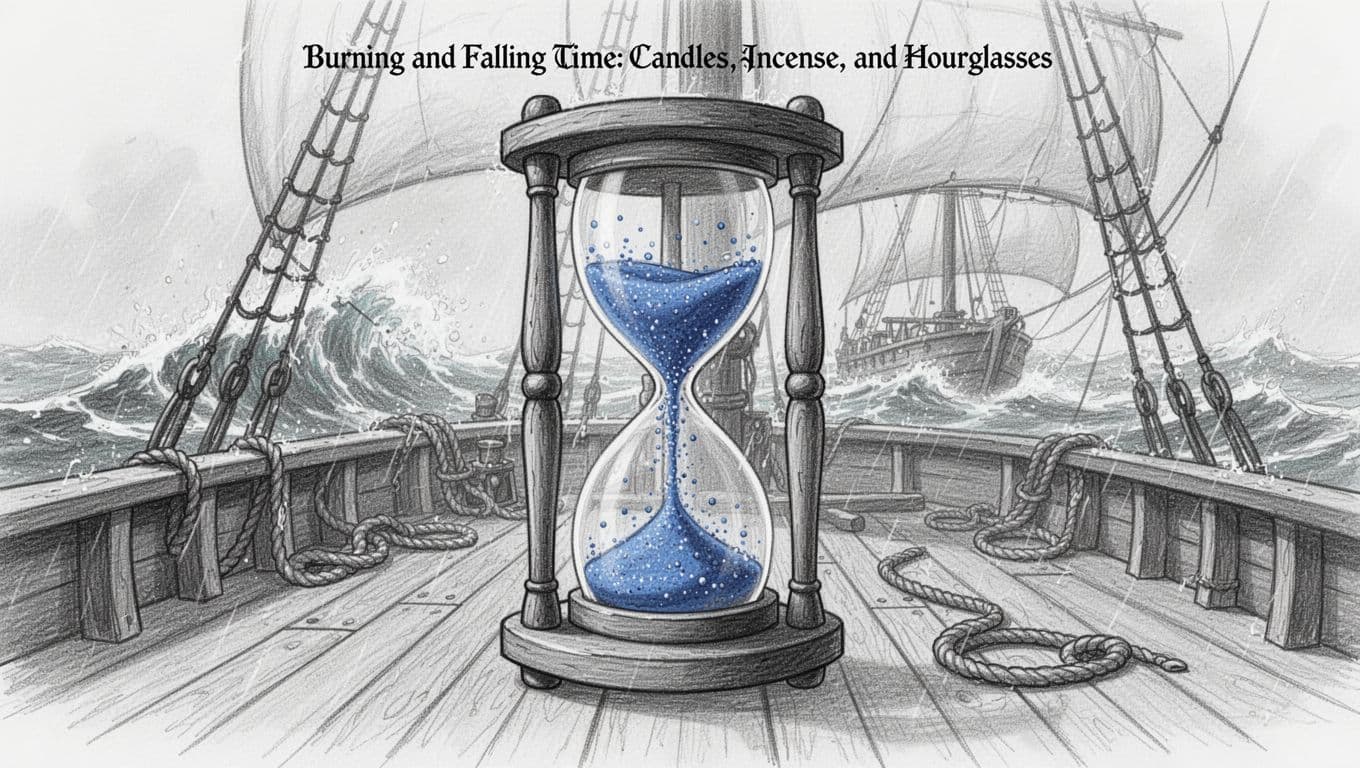
For travel, hourglasses became famous in Europe. Sand moved from one bulb to another. When the sand emptied, an hour had passed. Then you flipped it for the next hour.
Candle Clocks and Chinese Incense
Candles offered a simple promise: burn rate can act like a clock. Makers could mark a candle with lines so each section represented a time span. If the candle was made consistently and lit in steady conditions, the timer worked surprisingly well.
Incense clocks took a different approach. The burning scent and visible smoke helped users feel time passing. In theory, incense with uniform thickness and stable air conditions could burn at a steady pace, making it useful for measured intervals.
If you want a broader look at how many techniques appeared over time, see The History of Timekeeping.
In both cases, the tradeoff was clear. Fire-based clocks depended on conditions. Wind, humidity, and airflow could change burn speed.
Still, for short intervals and everyday needs, these clocks fit the job.
Hourglasses Perfect for Sea Voyages
Hourglasses had one major advantage: they didn’t care about weather in the same way sundials did. At sea, the sky could change fast. Clouds could block stars. Yet a sand timer could keep going.
Ship crews used hourglasses to measure set periods, then flip them when the sand ran out. That gave teams a shared schedule. It also made navigation routines easier, because tasks could repeat at known intervals.
In storm conditions, a water clock would be risky. You would spill water, tilt vessels, and lose accuracy. Sand, in sealed bulbs, held up better.
So while fire and water were impressive, sand became a practical travel tool.
The Enduring Legacy of Ancient Timekeepers
Even without modern electronics, ancient time systems left a long trail. One of the biggest legacies is how we split time into units.
The Babylonians used a base-60 math system, called sexagesimal. That choice helped shape minutes and hours. Today, you still see it when an hour has 60 minutes. You also see it in angles measured in degrees and minutes.
For context on where the base-60 idea came from, see Babylonian base 60 system.
Ancient methods also trained people to think in intervals. Once you get used to “measuring time,” you start wanting better tools. That push helped lead toward mechanical clocks, especially after mechanical designs began spreading in the late medieval period.
You still see the old ideas today. Garden sundials remind you that the sun still “keeps” time in its own way. Hourglasses show the simple rhythm of a falling measure. These objects can be educational and calming.
More importantly, they show something easy to miss. Timekeeping was never only about machines. It was about observation, patience, and turning nature into a schedule.
Conclusion
If you woke up without clocks, you still had options. Humans watched the sky, read shadows, timed flowing water, and used burning or falling materials. Each method matched the real world people lived in.
The strongest takeaway is this: timekeeping came from clever observation, not from instant technology. People adapted to their environment and kept improving.
Next time you check your watch, think of earlier days when someone judged the hour by a shadow’s edge. Want a hands-on version? Try making a simple sundial. Then share what you notice about your own local sun and shadows.