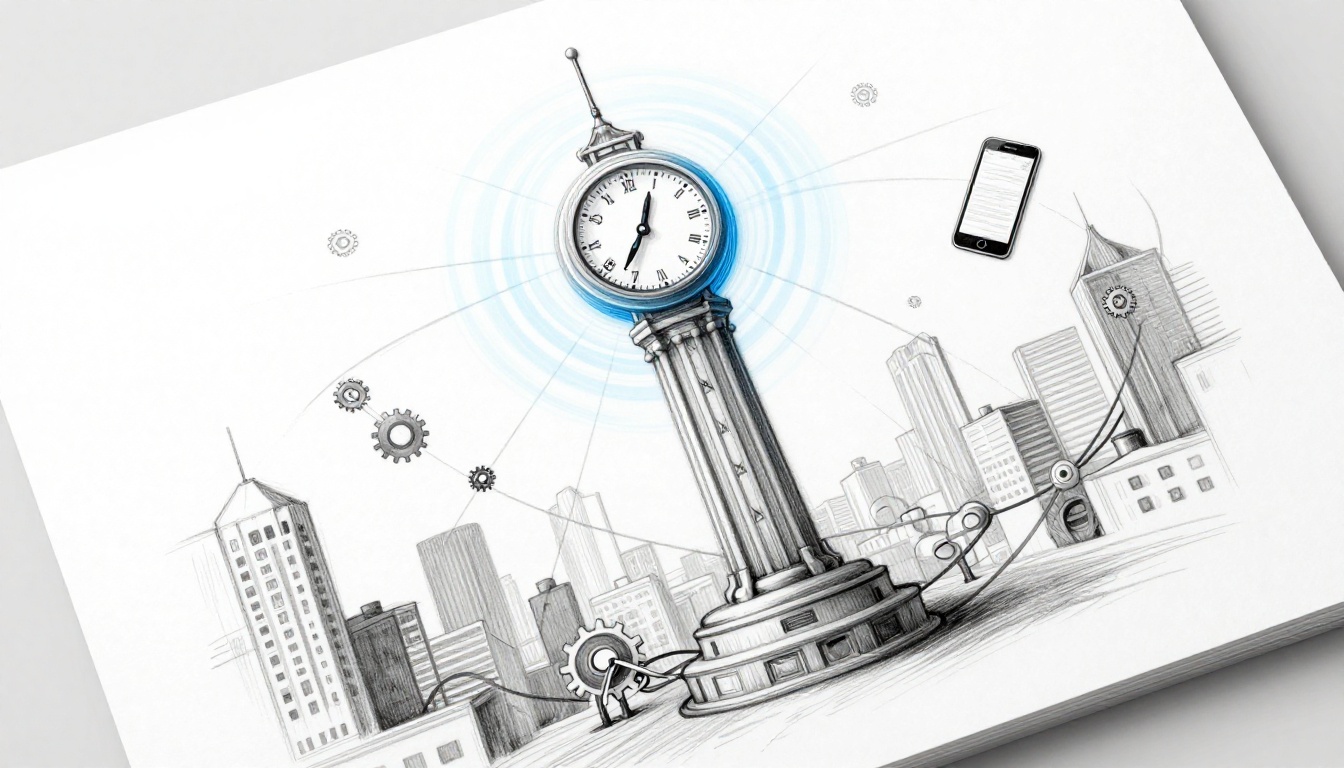
A split-second error can knock a trade out of order, throw off a navigation system, or make a phone sync with the wrong minute. That’s why time accuracy matters more than most people think. It’s also why technology is racing ahead in the background, turning timekeeping from “good enough” into something absurdly precise.
Today, your apps rely on clocks and networks that agree on time across cities and countries. In finance, small timing gaps can mean big losses. In mobility, the “right” timestamp helps sensors and signals line up safely.
The main idea is simple: technology, especially advanced clocks and timing networks, is making time measurement more precise and more useful in real life. Next, you’ll see how atomic clocks lead the way, how optical lattice clocks push limits further, and where all of that precision shows up in everyday tech and future systems.
Atomic Clocks: The Backbone of Today’s Super-Precise Timekeeping
Atomic clocks sound like lab-only tools, but they’re the foundation of modern timing. The best-known standard today uses cesium atoms. These clocks work by measuring a specific natural “beat” of cesium atoms when they interact with microwave energy.
In plain terms, imagine a band trying to play in perfect sync. If each musician has a metronome that never drifts, the music stays tight. In atomic clocks, the atom becomes that metronome.
Here’s the big win: atomic clocks keep time with an accuracy that would make a quartz watch look casual. Quartz oscillators drift more as temperature, aging, and other factors change. Atomic clocks, on the other hand, define time using a stable atomic transition. That’s why modern timing standards can lose less than a second over immense spans of time.
These clocks also matter beyond their own benches. Timing systems across the world must agree, and networks help spread that agreement. When clocks stay synchronized, GPS signals, telecom timing, and data systems can all act like they share the same “wall clock.”
If you want a deeper look at how this works in practice, NIST explains the design choices behind atomic clock performance in how atomic clocks work.

A fun everyday angle: the GPS constellation needs precise timekeeping. Satellites broadcast timing signals, and your device converts those signals into position. Tiny timing shifts can become noticeable distance errors, so accurate clocks help keep your location sane.
Why Cesium Atoms Make the Perfect Timekeepers
Cesium clocks earn their reputation because the atom behaves predictably. The clock targets a known atomic transition, then counts how often the transition repeats under controlled conditions. That repeatable vibration rate anchors the second.
Because cesium atoms provide a stable reference, the system can define time in a way that stays consistent year after year. Also, the best cesium clocks often use designs that improve how cleanly they measure that transition.
NIST’s cesium fountain atomic clocks are a good example of how labs push stability. In a “fountain” setup, atoms move in a controlled path, which helps reduce some effects that would otherwise smear the measurement.
Two more things make cesium so useful right now. First, there’s a lot of institutional experience around it. NIST and other national metrology labs use cesium clocks to maintain time standards and compare results. Second, the world already runs on timing systems built around these standards.
That doesn’t mean cesium is forever. It means cesium is the current backbone, and it’s already good enough to support GPS, telecom timing, and high-speed data systems.
Syncing Clocks Worldwide for Ultimate Accuracy
Even the best clock can’t help if everyone else disagrees. So technology also plays a role in time transfer and synchronization.
Worldwide sync uses networks like fiber optics to move timing information over long distances. The signal doesn’t just travel as “a message.” Timing methods measure phase and frequency so the receiving system can align closely with the sender.
This is where 2026 updates matter. Recent work focuses on networks that can sync with tight timing even when GPS becomes unreliable. For example, a 2026 workshop (WSTS, May 7, 2026) covered using mobile timing signals at around 900 MHz for super-precise timing, down to tens of nanoseconds, even without GPS. It also discussed PTP style approaches over long distances, comparing fiber-like methods to satellite-based transfer.
Then there’s the physics side. Relativity predicts that time can stretch slightly due to speed and gravity. When clocks sync across different heights or changing conditions, those effects can show up. So timing networks and clock comparisons must account for them, not ignore them.
Meanwhile, newer approaches keep popping up. A 2026 Quantum Internet Alliance webinar (April 14, 2026) highlighted quantum networking ideas that share special quantum states between clocks. The goal is a form of “global super clock” behavior without just trusting one device.
In short, technology isn’t only making clocks better. It’s also helping networks keep everyone on the same tick.
Optical Lattice Clocks: Leaping to Unmatched Precision
Optical lattice clocks aim higher than cesium by using much faster light-based transitions. Instead of microwave energy, they use lasers to probe atomic behavior at optical frequencies. Those frequencies are so high that the measurement can become dramatically more precise.
A common approach traps atoms in a grid created by laser light. The atoms sit in the “cage,” and the clock measures their transition with extreme care. Think of it like placing tiny dancers onto a stage with laser spotlights that hold them in position. They can still move a bit, but the cage makes the timing measurement far more controlled.
In 2026 news, strontium-based lattice clocks are a headline topic. One report described a clock that drifts by about one second in 30 billion years, reaching a level the team says is close to what’s needed for redefining the second. Another figure cited the uncertainty at around 9.2 × 10⁻¹⁹, showing how tightly the system can estimate errors.
Also, optical clocks aren’t limited to one species. Some research explores ytterbium ion clocks and other designs. The point is that the community is stacking multiple paths toward the same goal: timekeeping with fewer uncertainties and better real-world behavior.
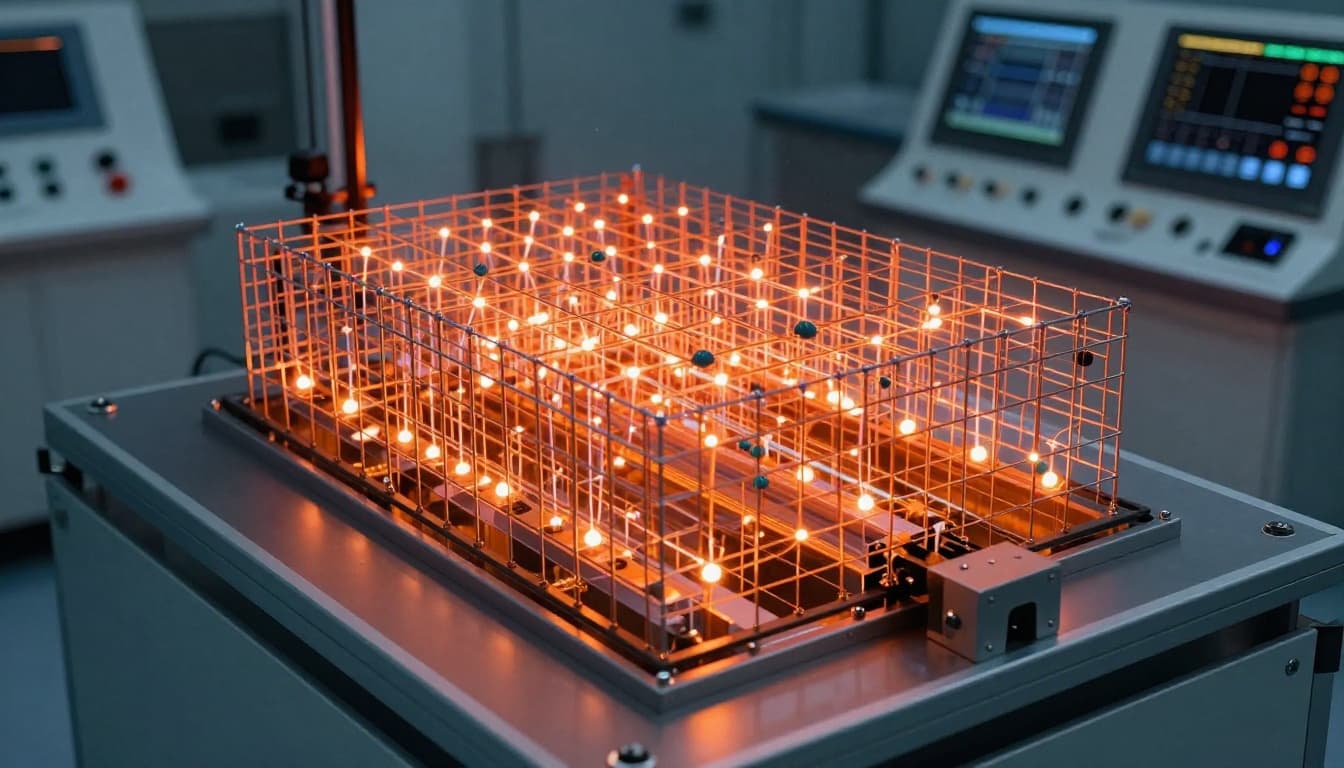
Still, it’s not just about “breaking records.” Optical clocks must prove they can match each other across labs and keep performance stable over time.
Strontium Clocks Leading the Charge in 2026
Strontium lattice clocks keep earning attention because their results look strong enough to challenge the current standard.
In 2026, researchers also highlighted progress toward international comparisons. Chinese Academy of Sciences reporting described “steering” international atomic time using optical clocks, tied to BIPM’s time bulletin updates. That matters because redefining time standards requires more than one lab doing great work. You need labs to align their clock behavior and show their uncertainty estimates hold up.
The practical takeaway: technology helps turn optical clocks from a “wow science demo” into something that can join global timing systems.
For readers who want a specific 2026 reference, see China’s optical clock steering update.
Beating Gravity and Motion for Real-World Use
Optical lattice clocks don’t just keep time. They also help measure subtle changes in the world.
Because they can detect tiny shifts, these clocks can respond to small changes in gravity and motion. If you move a clock a little up or down, the gravitational conditions change slightly, and relativity predicts a tiny time effect. In other words, the clock becomes a sensor.
That’s a big reason future systems may become both more accurate and more useful. Instead of timekeeping only serving navigation and networks, it can also help with science tasks like mapping gravity variations and testing physical models.
However, turning this into a mass product brings friction. Optical clocks are complex. They need careful lasers, stable setups, and lots of calibration time. The next wave of progress depends on making these systems more stable outside top-tier labs.
Powering Everyday Tech: From GPS to High-Speed Finance
Technology’s role in time accuracy shows up everywhere you look, even when you never think about clocks.
GPS depends on precise timing to turn satellite signals into accurate positions. If the timing is off, distance estimates become wrong. Also, modern GPS systems use backups when satellites fail, because outages and interference happen.
Telecom networks rely on time synchronization too. 5G and future 6G systems need tight alignment between base stations to manage signal timing and reduce glitches. Finance platforms also need agreement on event order and timestamps. A delay of microseconds can shift which trade appears first, and that changes outcomes.
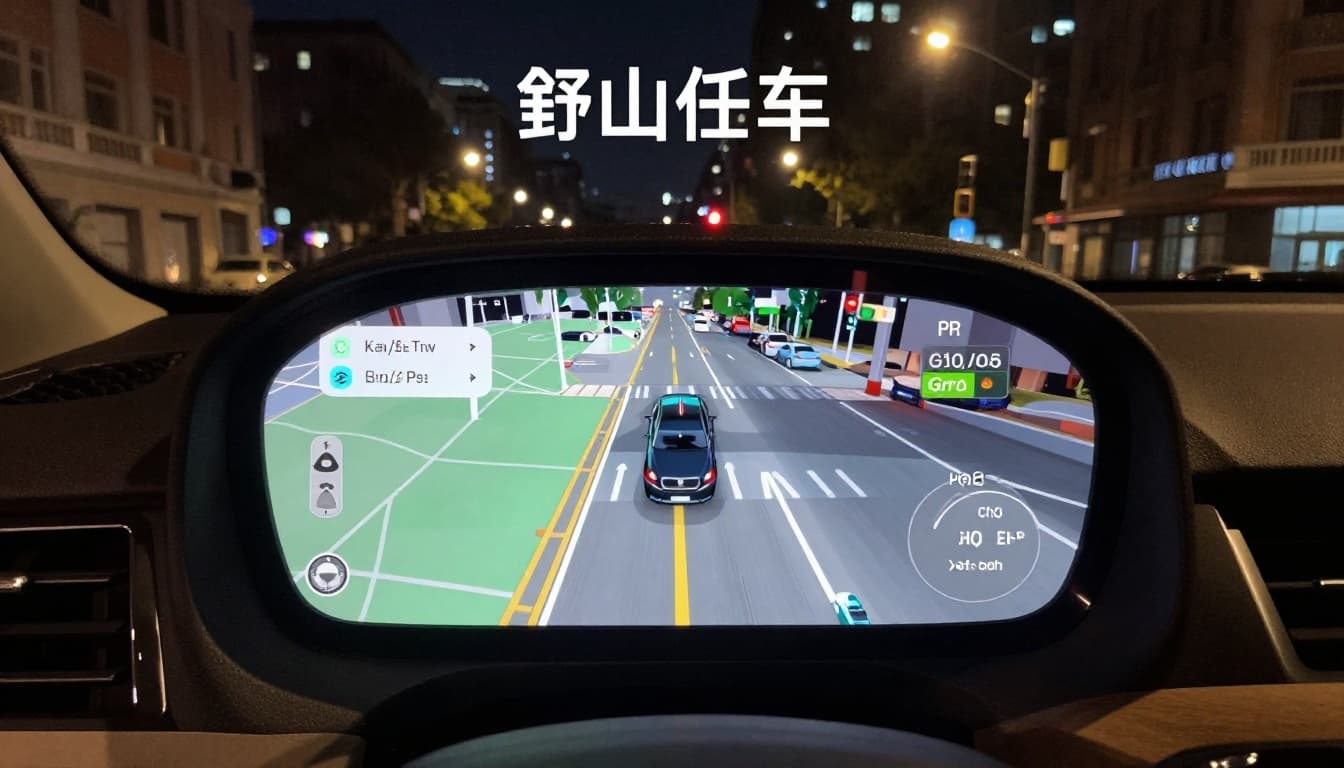
Autonomous vehicles and drones add another layer. They fuse sensor data and must align timestamps across cameras, radar, and vehicle systems. If time stamps drift, sensor fusion can misjudge distances and motion.
Here’s where the 2026 timing push gets practical.
| Area | What time accuracy affects | Why it matters |
|---|---|---|
| GPS and backups | Signal timing and fallback clocks | Better location even during GPS issues |
| 5G timing | Base-station synchronization | Fewer drops, smoother data flow |
| Finance timestamps | Order and event timing | Fair ordering for fast trades |
| Self-driving systems | Sensor timestamp alignment | Safer perception and control |
Recent UK reporting also points to terrestrial timing signals that reduce reliance on satellites. A government release described a new terrestrial timing approach to protect phone networks and online banking when satellite timing gets disrupted. See timing tech to protect services for the core idea and motivation.
So, the role of technology is not only “more accurate clocks.” It’s also resilient timing systems that keep working when conditions change.
A quick gotcha: when time systems fail, the result isn’t always obvious. It can look like “random” glitches, because delays pile up in invisible ways.
Revolutionizing Navigation and Self-Driving Cars
Navigation tech uses timing in a deeper way than many people realize. Your car or drone doesn’t just read a GPS location. It also needs stable timing to keep sensors and motion models aligned.
A self-driving system relies on a chain of timestamps. If GPS timing and onboard sensor timing don’t line up, the system may estimate motion wrong for a moment. That might not sound scary, but at city speeds, small errors can stack quickly.
Precise timing helps vehicle systems:
- Match camera and radar frames to the right moment
- Predict motion more consistently
- Coordinate with traffic signals and shared fleet systems
Also, drones often fly in tight spaces. They can depend on precise timing for control loops and for safe coordination with other systems.
Even when the vehicle isn’t fully autonomous, better timing reduces confusion in mapping, route updates, and sensor calibration.
Syncing 5G/6G and Financial Markets Seamlessly
Time accuracy affects telecom and finance in different ways, but the core need is the same: systems must agree on when things happen.
For 5G, base stations need synchronization down to very small time differences. That helps reduce delays and keeps the network stable under load. If one part of the network drifts, signals don’t line up as intended. Users notice as stutters, dropouts, or broken handoffs.
In finance, the stakes are even sharper. Exchanges and trading platforms coordinate timestamps so orders stay in the right order. If timing drifts between systems, platforms may misinterpret event order or struggle during reconciliations.
That’s why the finance world keeps investing in precision timing infrastructure. For example, GPS World reported on a partnership to deliver resilient precision timing to financial markets through LSEG’s platform. You can read about the focus on resilient timing for trading systems in precision timing for financial markets.
The broader point is this: time accuracy now acts like a shared “language” across industries. When technology improves the language, systems work better together.
Future Horizons: Trends and Tough Challenges Ahead
So what comes next for time accuracy? Expect more optical clock deployments, more time transfer experiments, and more resilience planning.
One strong trend is multiple optical clocks working toward a future time standard. Instead of betting everything on one clock, researchers aim for agreement across several designs and labs. Another trend is quantum networking research, including ideas where independent clocks share quantum states to create a kind of global coordination.
A 2026 Quantum Internet Alliance event highlighted quantum networking approaches for multiparty entanglement between clocks. That kind of work could, in the long run, create new timing tools for science and secure coordination.

At the same time, there are tough challenges.
Optical clocks need hardware that’s stable, compact, and affordable enough for more than a few labs. Timing networks also need secure, reliable methods to avoid attacks and accidental mis-sync. In 2026, timing security research and defenses for network timing attacks got attention at events like NDSS Symposia, which shows how serious the threat model has become.
Meanwhile, the environment keeps pushing back. Temperature changes, vibration, and even local conditions can affect system behavior. Technology can correct for many effects, but it adds complexity.
Redefining Time and Quantum Leaps Coming Soon
The next leap in time accuracy likely comes from redefining the second with optical clocks. Optical systems have already shown performance so high that the uncertainty budgets look close to what’s needed for a major standards shift.
Quantum ideas add another layer. Rather than only sending timing signals, quantum networking could enable coordination methods with new security properties and new accuracy routes.
Still, “coming soon” depends on measurement agreement. Labs must compare results, verify uncertainty models, and show stability over time. That’s hard work, but it’s the only way a new time standard becomes trustworthy.
Overcoming Size, Cost, and Real-World Hurdles
Even if optical clocks beat cesium in accuracy, they must also fit into reality. That means better packaging, fewer moving parts, and more stable optics.
A key hurdle is matching. Different clock designs must agree under known comparisons. If two optical clocks disagree more than expected, networks can’t safely assume which one to trust.
Also, time transfer needs backups and fallback modes. That’s why 2026 work covered resilient sync paths, including terrestrial signals around 900 MHz for cases where GPS gets blocked. It’s a reminder that the future isn’t only about better clocks. It’s about better systems that keep working when conditions turn messy.
And that’s the real role technology plays in time accuracy. It makes clocks smarter, and it makes timing networks stronger.
Conclusion
A split-second can matter a lot, whether you’re trading stocks, navigating a city, or coordinating data across devices. Technology is improving time accuracy by building better clocks and smarter synchronization networks.
Cesium atomic clocks still anchor the current standard, and optical lattice clocks are pushing accuracy toward a new level. Meanwhile, networks that transfer time over fiber and wireless links help keep everything aligned, even during GPS trouble.
If you want one practical next step, pay attention to standards updates from major timing labs like NIST, especially as optical clock work matures. And the next time GPS guides you, remember what’s really behind it: human-built precision systems working together on a shared tick.