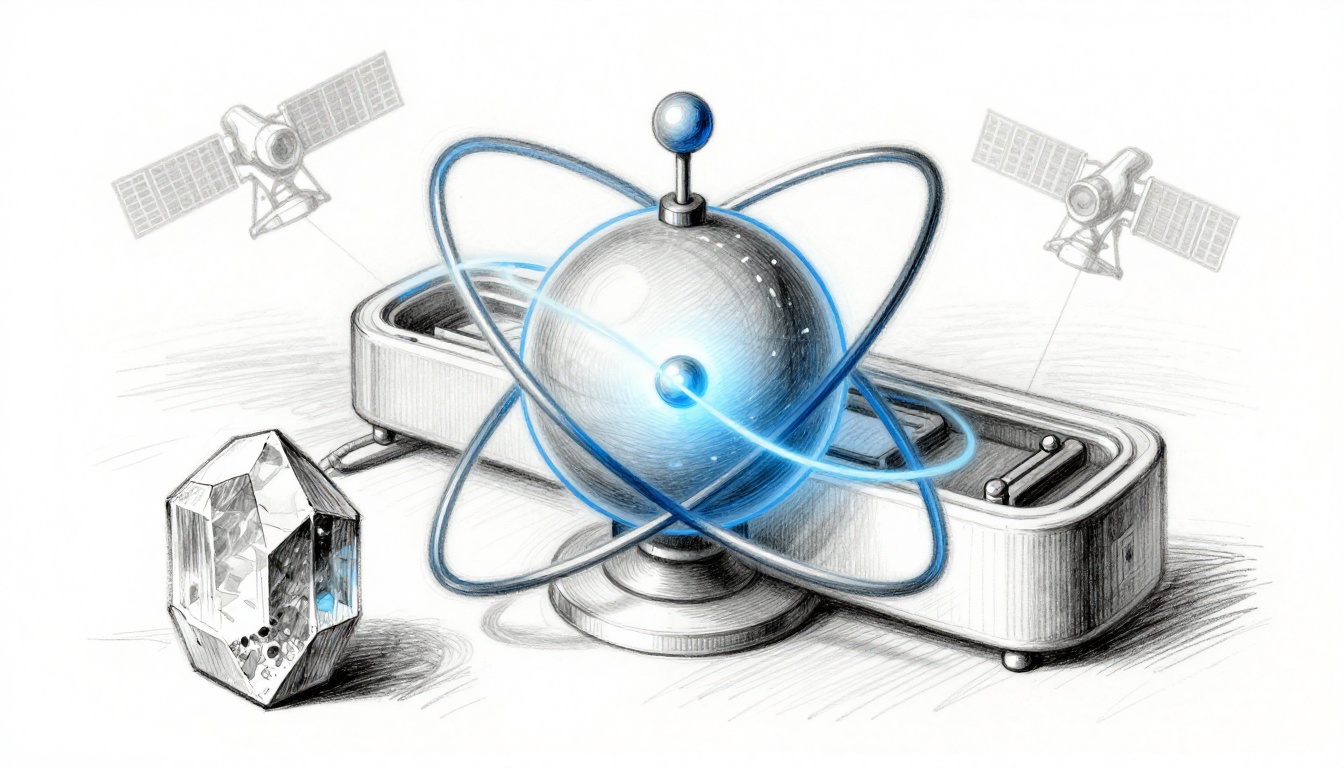
An atomic clock can run for millions of years without drifting by even a second. Your wristwatch, on the other hand, will slowly wander. That difference matters more than you might think.
Atomic clocks measure time by using atoms and their very steady natural vibrations. Because those vibrations stay consistent, atomic clocks power systems that need tight timing, like GPS, phone networks, and advanced science. Once you see how they work, their “impossibly accurate” reputation starts to make sense.
Ready to understand what’s inside an atomic clock, the types people use today, and why modern life depends on it?
How Do Atomic Clocks Measure Time with Incredible Accuracy?
A regular clock starts with a “timekeeper,” often a quartz crystal. The crystal vibrates at a steady rate, yet it still drifts. Temperature changes, aging parts, and other real-world effects nudge the timing off.
Atomic clocks fix that problem by adding a second reference that doesn’t drift much: atoms. Think of it like this. Your quartz oscillator is a radio dial that moves slightly. The atoms act like the radio station you keep retuning to.
Here’s the core idea, step by step:
First, the clock runs a local oscillator, often based on quartz. Next, it uses microwaves (or lasers in some clock types) to “probe” atoms. Then, the clock checks whether the atom transition happened at the right frequency. Finally, a feedback system adjusts the oscillator so it stays aligned with the atom’s resonance.
In many designs, the atom signal is so stable that the system can keep correcting tiny errors over and over. It’s not one perfect moment. It’s constant correction.
That stability is also why the definition of the second is so specific. Today, the second is based on a cesium transition frequency of 9,192,631,770 cycles. In plain terms, the clock counts the right “ticks” and stays locked to that standard.
If you want a clear picture of how atomic clocks evolved into today’s precision machines, NIST’s explanation of early designs is a great place to start with the “why” behind the engineering: Beams of atoms in the first atomic clocks.
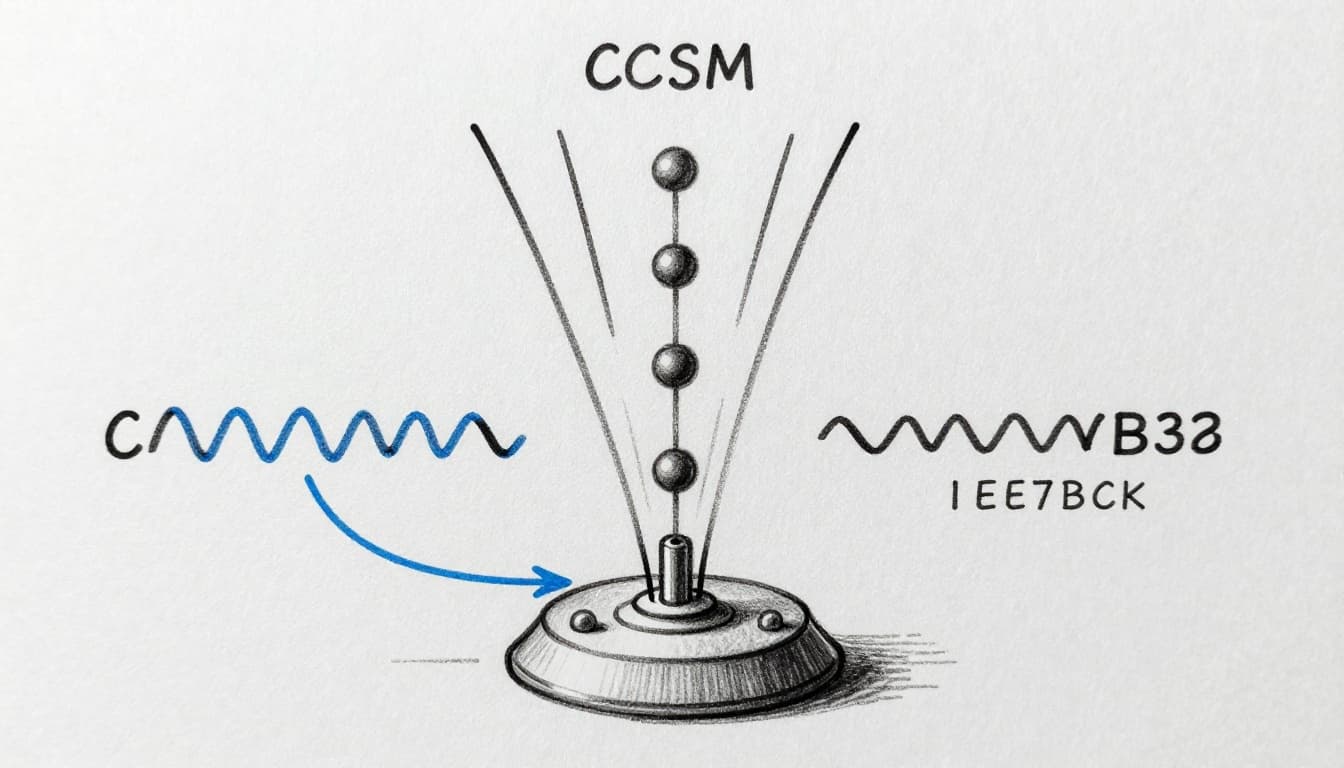
In many modern labs, designs like atomic “fountains” make this feedback loop even steadier by controlling the atoms’ motion. NIST’s overview of those timekeepers helps connect the ideas to real hardware: Atom fountains, exquisite timekeepers.
The Key Role of Cesium Atoms in Defining the Second
Cesium is the star atom behind the official definition of the second. The reason is simple: cesium atoms have a natural resonance frequency that’s extremely consistent.
In a typical cesium setup, technicians cool cesium atoms so they move slowly. Then they use microwaves to nudge the atoms into a specific energy state. When the microwave frequency matches the cesium resonance, the atoms “flip” in a predictable way. Sensors then detect those flips.
After that, the feedback system tunes the oscillator until the atom response shows the correct frequency. Over time, that keeps the clock aligned with a worldwide standard.
Cesium became the international reference around 1967, and it still plays a major role today. Even though newer optical clocks are racing ahead in accuracy, cesium remains the dependable workhorse behind a lot of timekeeping infrastructure.
The best part is what you don’t see. You’re not watching electrons jump. Yet your systems still benefit from the payoff. A cesium-based atomic clock can drift by about one second over tens of millions of years, depending on the model and environment. That’s hard to imagine, which is exactly why atomic clocks transformed how “time” is treated in science and technology.
Which Types of Atomic Clocks Are Used Today?
Not all atomic clocks look the same, and they’re not built for the same job. Some clocks aim for maximum accuracy in a lab. Others aim for stability in smaller, more practical packages.
Also, atomic timekeeping doesn’t depend on just one clock. Instead, systems blend results from many labs. As of recent measurements, International Atomic Time (TAI) uses over 450 atomic clocks across more than 80 national laboratories. That network helps average out quirks and keep the global standard stable.
So what kinds of atomic clocks do you actually hear about?
- Cesium clocks: long-standing standard, extremely stable.
- Rubidium clocks: smaller and cheaper, often used when cost and size matter.
- Optical clocks: use light frequencies and can reach astonishing precision.
- Mercury ion clocks: common in space missions because they can be engineered for harsh conditions.
If you want a readable overview of why optical clocks can beat older microwave designs, this background from RP Photonics is useful: Optical clock basics.

In addition, the “best” clock depends on where it needs to work. In a standards lab, you can afford big equipment. In a phone or spacecraft, you can’t.
Cesium and Rubidium: The Workhorses of Timekeeping
Cesium and rubidium clocks are the practical backbone of many systems. They’re not just accurate. They also have a proven track record.
Cesium clocks often serve official timekeeping roles. They’re built to stay stable and to match the definition of the second. That makes them ideal for national time centers and for feeding time signals into global systems.
Rubidium clocks work differently but share the same goal: stable atomic resonance. They use rubidium atoms, and many designs are more compact. As a result, rubidium clocks show up in settings where you need reliable timing without the largest lab footprint.
Here’s the trade-off. Optical clocks can be more precise, but they can be harder to run and maintain in everyday settings. Cesium and rubidium can be less precise than the newest optical research, yet they’re easier to deploy.
So if you’re asking, “Why do so many systems still rely on older atoms?” the answer is engineering reality. Reliability matters. Cost matters. And “good enough, everywhere” can beat “perfect, only in a lab.”
Optical and Ion Clocks: Pushing the Limits of Precision
Optical atomic clocks aim higher by using light instead of microwaves. Rather than counting cesium transitions, they use strontium or ytterbium atoms that vibrate at visible or near-visible frequencies.
Why does that help? Because those optical frequencies are far higher than microwave frequencies. That gives optical clocks a finer way to count time. In recent results, researchers built optical clocks that can drift by about one second over 30 billion years. That’s not a metaphor. It’s an actual measured stability scale.
In March 2026, the push is also tied to whether optical clocks can become the official standard. The work is moving fast, and scientists now discuss redefining the second based on optical clocks. For that to happen, multiple optical clocks of the same type must operate with matching performance in different institutions.
Ion clocks are another major path. One well-known example is NASA’s Deep Space Atomic Clock project. It used mercury ions and was designed for deep-space navigation. The original Deep Space Atomic Clock flew in 2019 and was turned off in September 2021 after about two years. NASA is now building DSAC-2, aimed for a Venus mission in 2028, and it’s expected to be more stable.
In other words, the “best clock” isn’t only about math. It’s about where the clock has to survive and still keep time.
How Atomic Clocks Make Modern Life Possible
Atomic clocks don’t just impress scientists. They keep everyday systems from sliding out of sync.
If you ever wondered why GPS can be so accurate, the answer starts with time. GPS depends on knowing how long signals take to travel from satellites to your receiver. Since radio waves move at the speed of light, tiny timing errors turn into large position errors.
That same idea shows up elsewhere. Telecom networks need synchronized timing. Financial systems use precise timestamps for trades. Power grid operators also rely on accurate timing data behind the scenes.
Here are a few places timing precision shows up most clearly:
- GPS positioning and timing
- Network sync for calls and data
- Trading and settlement timestamps
- Physics tests that check fundamental laws
- Time signals used by labs and infrastructure
The takeaway is simple: if time is off, systems build the wrong answers.
GPS: Finding Your Way Thanks to Atomic Precision
GPS satellites broadcast signals that include timing information. Your receiver compares when the signal was sent to when it arrived. Then it calculates your distance from each satellite.
Because it’s a timing game, even a tiny drift becomes a big error. A delay of one microsecond in signal timing can lead to about 300 meters of position error (since light travels about 300 meters in a microsecond).
That’s why GPS depends on clocks that stay aligned to atomic standards. Without them, your location would “walk” across the map, sometimes quickly.
It’s also why GPS requires careful control and updates. Space infrastructure doesn’t forgive sloppy timing. In the U.S., the Space Force has discussed how the atomic clocks on GPS satellites keep the world in sync, noting the long-running value of onboard timekeeping: GPS atomic clocks and global sync.

So next time your phone finds your position in seconds, remember what’s really happening. The map app is doing math, but the accuracy comes from atomic timing far above you.
Beyond Navigation: Telecom, Finance, and Science
GPS gets most of the attention, yet timing also shapes modern communication. Network equipment schedules data using synchronized clocks. When timing slips, data can arrive late or out of order.
Finance is another big one. Trading systems stamp events with extremely fine time marks. If timestamps drift, it can affect order sequencing and settlement processes.
Science uses atomic clocks for tests that don’t feel “everyday,” but the principle still comes down to time. Researchers can check how gravity affects time, test relativity, and look for tiny changes in physical constants. Over long periods, those effects add up.
Even industry benefits. Accurate time helps coordinate the power grid and supports control systems. In practice, it reduces noise and helps keep complex systems running on the same schedule.
NIST sums up this broader impact well when it calls atomic clocks a “technology powerhouse,” linking time standards to real applications: Why atomic clocks power key technologies.
The Future: Smaller, Smarter Atomic Clocks on the Horizon
Atomic clock research keeps pushing two goals at once. First, clocks need higher precision. Second, they need to fit into more places.
Optical clocks lead the precision race. They’ve improved so fast that researchers are already thinking about changing how the second is defined. Recent work shows extreme long-term stability, and early 2026 results suggest optical clocks can achieve performance that far exceeds cesium designs in pure accuracy.
However, there’s a practical hurdle. A clock that’s perfect in a lab may be hard to run in the field. That includes stability over long sessions, resistance to vibration, and simpler ways to operate the system.
The good news is that engineering is moving. In labs and test setups, optical clock designs are becoming more compact, and some are starting to operate beyond strict lab conditions.
Meanwhile, ion clock technology supports another future: more autonomous space navigation. NASA’s Deep Space Atomic Clock program shows why. Accurate clocks help spacecraft figure out their location without constant ground signals. That reduces mission overhead and improves planning.
In short, the next wave isn’t only about “better time.” It’s about time that travels. It goes into space missions, into new navigation ideas, and into systems that still depend on precise synchronization.
Conclusion
Atomic clocks use atoms to set time, and that’s why they stay so accurate. They measure time by locking an oscillator to atomic resonance, with constant feedback that corrects tiny drift.
Different atomic clock types serve different needs. Cesium and rubidium provide proven stability, while optical and ion clocks push precision to new limits.
Most importantly, atomic clocks make modern systems work. GPS, network timing, and major science all rely on time that doesn’t slip.
If the idea of “one second” is this carefully engineered, it’s worth paying attention to time standards. Next time your device locks onto GPS, ask yourself what unseen timekeeping made it possible.